

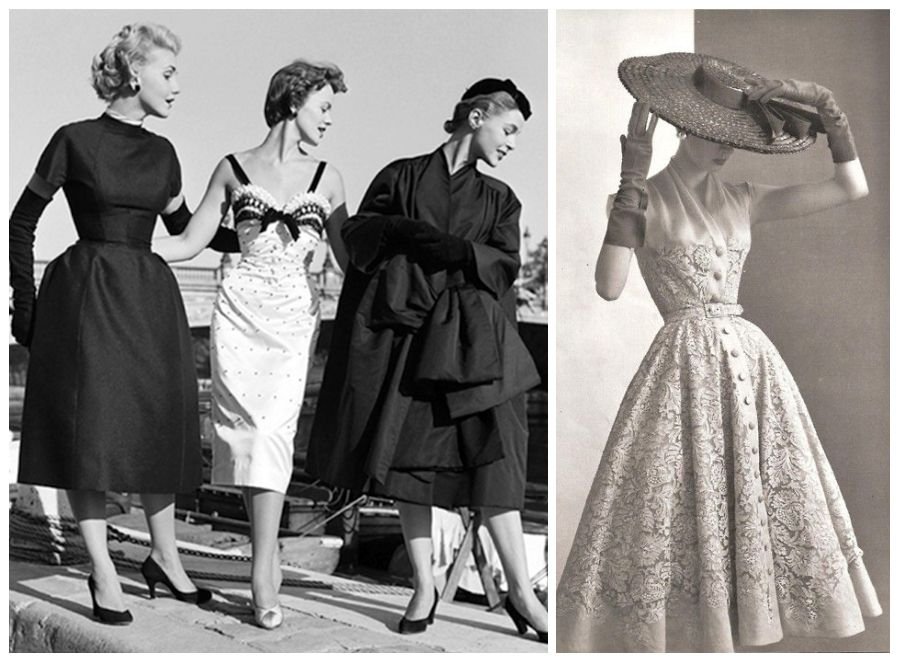
On February 12, 1947, in the dove-gray salons of 30 Avenue Montaigne in Paris, a 42-year-old designer named Christian Dior showed his first collection and changed how women dressed for the next decade. The press called it the New Look a name coined that day by Harper’s Bazaar editor-in-chief Carmel Snow, who told Dior, “Your dresses have such a New Look” and it became the single most influential silhouette of the twentieth century.
At BrassSmile, we cover fashion the way we cover every luxury category: by looking at what something actually is, why it earned its status, and whether it still matters. Seventy-nine years on, Dior’s New Look passes all three tests.
This is the story of that February morning: what the New Look looked like, why it landed like a thunderclap in postwar Europe, and how its codes the cinched waist, the rounded shoulder, the Bar jacket keep resurfacing in modern collections.
What Was Dior’s New Look, Exactly?
The New Look was the debut haute couture collection of Christian Dior, presented on February 12, 1947, in two named lines: Corolle (a molded bodice, tiny waist, and ample swinging skirt, evoking an inverted flower) and En Huit (a neat, curvy figure-eight silhouette emphasizing the waist and hip). The collection’s defining break from wartime fashion was its return to ultra-feminine structure soft shoulders, a corseted waist, padded hips, and long, full skirts using lavish amounts of fabric at a time when cloth was still rationed.
The look crystallized in a single garment: the Bar suit. An ivory silk shantung jacket with five buttons, nipped at the waist and flaring gently over the hips, worn with a pleated black wool crepe skirt of enormous volume. Legend holds that the jacket was named for the bar at the Plaza Athénée hotel, where Dior liked to take his cocktails and that his young assistant Pierre Cardin was sent out mid-preparation to buy cotton padding to give the model’s hips their rounded shape.
The Bar jacket was so widely copied that it remains one of the most replicated garments ever made; Dior himself reworked it in nearly all 22 couture collections he designed before his death in 1957. Today, the house continues to treat the Bar jacket as the centerpiece of its heritage, from the 30 Montaigne line to its modern reinterpretations, as Dior’s own archive documents.
Why 1947 Was the Perfect Moment
Context explains the explosion. Europe in 1947 was cold, rationed, and exhausted; Paris was enduring one of its harshest winters since 1870. Women’s wartime dress had been dictated by utility: boxy shoulders, short straight skirts, minimal fabric, no petticoats. Dior himself wrote that women “still looked and dressed like Amazons” after years of uniforms and that he designed for “flower-like women” instead.
The New Look was therefore not just clothing but psychological relief. Its nostalgia eighteenth-century corsetry, Belle Époque curves offered an escape into an idealized prewar past. As LIFE magazine observed in its March 1948 cover story on Dior, he “appeared at the psychological moment” and converted scattered prewar experiments into a mass movement. The collection also reasserted Paris as the world’s couture capital, reclaiming ground American designers had briefly held during the war.
Key Characteristics of the Dior New Look Silhouette
| Feature | Description |
|---|---|
| Shoulders | Soft, sloping, unstructured — a deliberate rejection of wartime shoulder pads |
| Waist | Sharply corseted and cinched, often reduced by up to two inches via internal corsetry |
| Hips | Rounded and padded to exaggerate an hourglass curve |
| Bust | Prominent, rounded, and sculpted into the bodice |
| Skirt | Long (calf-length or below) and very full, sometimes using more than a dozen meters of fabric |
| Hemline | Well below the knee, versus the short practical skirts of the 1940s |
| Overall effect | An inverted-flower or figure-eight silhouette built on abundance after austerity |
The Backlash: Not Everyone Applauded
The New Look’s extravagance provoked genuine anger. Fabric rationing was still in force in Britain and France, and some women reportedly protested in the streets, resenting skirts that consumed up to 13 or more meters of wool crepe while cloth remained scarce. Coco Chanel, whose relaxed jersey designs the New Look had effectively displaced, dismissed Dior’s work with the now-famous line that he didn’t dress women he “upholstered” them.
There is also a serious feminist critique: after women had entered the workforce in wartime, the New Look’s corsetry and immobilizing skirts looked like a step backward, a return to ornamental domesticity. Historians note Dior was channeling the era’s nostalgia rather than engineering a political statement but the silhouette undeniably framed the 1950s ideal of the immaculately dressed woman. The debate itself is part of the New Look’s significance, and any honest account of postwar fashion history has to include it.
The New Look After Dior: A Legacy Through Every Creative Director
Dior died suddenly in October 1957 at just 52, but the New Look proved larger than its founder. Each successive creative director at the house has had to reckon with the Bar jacket — sometimes honoring it, sometimes escaping it.
-
Yves Saint Laurent (1958–1960): Dior’s 21-year-old successor loosened the silhouette almost immediately with his Trapeze line, elongating and dissolving the Bar jacket — a preview of the 1960s.
-
Marc Bohan (1961–1989): Nearly three decades of softer, more linear elegance. His first collection was pointedly called the Slim Look, and he reissued a near-faithful Bar suit in 1987.
-
Gianfranco Ferré (1989–1996): Brought architectural flamboyance; his Bar jackets had voluptuous, historical grandeur.
-
John Galliano (1996–2011): Pushed the house’s codes into theatrical hyperbole, with Bar jackets rendered in extravagant volumes.
-
Raf Simons (2012–2015): Stripped the New Look back clean, modern, minimalist.
-
Maria Grazia Chiuri (2016–present): Has celebrated the Bar jacket in nearly every collection, anchoring her feminist-inflected vision in the house’s most feminine garment.
Dior New Look Modern Fashion: Why 1947 Still Runs 2026
The reason the New Look refuses to become a museum piece is that it established a visual grammar luxury still speaks. The nipped-waist blazer, the full midi skirt, the deliberate contrast between structured top and voluminous bottom these codes cycle through contemporary runways and fall 2026 fashion trends coverage, where statement skirts and subverted tailoring dominate.
For readers who follow modern luxury, the parallels are easy to spot: the recent return of quiet, intentional dressing over disposable micro-trends rewards exactly the qualities the New Look embodied craftsmanship, fabric volume, and silhouette as identity.
That shift toward quality over flash is one we have tracked across luxury categories, from what defines modern luxury in 2026 to the renewed prestige of heritage maisons, the same reason British fashion brands with genuine craft credentials command respect far beyond London.
And for the collector-minded reader, the New Look endures in a very literal way: original 1947–1957 Dior pieces are among the most sought-after acquisitions in vintage couture, and the Bar jacket remains in continuous production at the house a rare case of a fashion object that is simultaneously a historical artifact and a current-season purchase.
If you are building a wardrobe or a collection around pieces that outlast trends, the lesson of 1947 is simple: silhouette ages better than novelty.
The Bottom Line
Dior’s New Look was never just a dress silhouette. It was the moment fashion announced that the war was over, that abundance had returned, and that a single designer’s vision could reset an entire culture’s idea of beauty for better and, in the eyes of critics, for worse. Nearly eight decades later, the cinched waist and the Bar jacket still anchor one of the world’s most valuable luxury houses.
That staying power, not the shock of 1947, is the real revolution. And for BrassSmile readers who invest in pieces with permanence, it remains the clearest case study in fashion history of a silhouette that became an asset.
Frequently Asked Questions
Who coined the term “New Look”?
Carmel Snow, editor-in-chief of Harper’s Bazaar, after seeing Dior’s debut collection on February 12, 1947. Dior himself never named the collection; the press did.
What are the main characteristics of the Dior New Look?
Soft rounded shoulders, a tightly cinched corseted waist, padded hips, a prominent bust, and a long, very full skirt — an hourglass or inverted-flower silhouette built from generous quantities of fabric.
What is the Dior Bar jacket?
The fitted, five-button jacket from the 1947 Bar suit, named for the bar of the Plaza Athénée hotel. It is the most iconic single garment of the New Look and has been reinterpreted by every Dior creative director since 1947.
Is the New Look still relevant today?
Yes. The Bar jacket remains in production, the New Look silhouette cycles through modern runways, and original pieces are prized in vintage couture. Its codes structure, waist definition, volume are permanent fixtures of womenswear.