

Introduction
British fashion brands command global respect not because they happen to operate out of London, but because centuries of tailoring heritage, trench-coat engineering, and punk-to-luxury rebellion back them up.
Here at BrassSmile, we know you want clear answers rather than vague fluff about “timeless elegance.” Anyone can open a distribution warehouse in Manchester, but true British style is forged through precise Savile Row geometry, rebellious subcultural tension, and meticulous craftsmanship.
This guide cuts through the noise of mass-market retail to examine the houses that actually carry the weight of the UK fashion industry.
Quick Summary
British fashion brands are globally recognized for pioneering tailoring, heritage outerwear, and subversive design lineage, anchored by a domestic apparel market that generated approximately £68.7 billion by the end of 2025 (Spring Fair UK Fashion Industry Report, Nov 2025).
The industry balances centuries-old craftsmanship with modern sustainability shifts, distinguishing true luxury houses from high-street retailers.
Key Takeaways
- Economic impact: The UK fashion and textiles industry contributes approximately £26 billion in Gross Value Added annually (UKFT, 2026).
- Global market standing: The UK remains the third-largest apparel and footwear market globally, behind only the United States and China (Spring Fair UK Fashion Industry Report, Nov 2025).
- Consumer spending: Average UK per-capita apparel spending reached approximately £1,003 in 2025, with about 61.2 pieces bought per year (Spring Fair UK Fashion Industry Report, Nov 2025).
- Retail landscape: The UK Clothing Retailing industry is valued at £49.4 billion across 11,261 businesses in 2026 (IBISWorld, 2026).
- Operational cost pressures: 84% of UK retailers ranked labor costs as a top business concern entering 2026 (British Retail Consortium via IBISWorld, 2026).
- Luxury market growth: The global luxury fashion market is valued at approximately $131.7 billion in 2026, heading toward $238.6 billion by 2035 (Fortune Business Insights, 2026).
- Domestic luxury positioning: The UK luxury market grows at a 3-5% CAGR, emphasizing “Made in Britain” narratives and digital sustainability verification (Sourceready UK Luxury Fashion Report, 2026).
- Circular transition: 73% of fashion brands invested in circular-economy initiatives as of 2025, embracing resale, repair, and rental frameworks (Accio, 2026).
What Makes a Brand “British Fashion” in the First Place?
Heritage and Craftsmanship Lineage
True British fashion brands inherit centuries of textile manufacturing traditions rooted in regional craftsmanship, from Scottish cashmere mills to specialized West Country leather workshops.
This lineage values durability and structural integrity over fleeting seasonal trends. A garment earns its British identity through technical heritage passed down through generations of artisans.
The Tailoring and Savile Row Influence
London’s Savile Row established the gold standard for structured menswear and sharp feminine tailoring.
The discipline relies on canvas construction, precise shoulder shaping, and bespoke fittings that take dozens of hours. This structural rigor trickles down into ready-to-wear collections, defining the sharp silhouette recognized worldwide.
The Punk-to-Luxury Design Lineage
Britain uniquely bridges the gap between anarchic subcultures and high-end couture. Designers like Vivienne Westwood and Alexander McQueen weaponized tartan, safety pins, and Victorian historical references to challenge establishment norms.
This tension between romantic heritage and rebellious disruption remains a core signature of UK design.
| Factor | Heritage Fashion House | UK-Based Fast Fashion Retailer |
| Design Lineage | Deeply rooted in couture archives, tailoring, or subcultural history | Rapidly adapts mass-market trends inspired by social media |
| Price Positioning | Mid-to-high luxury tier ($500 to $5,000+ per garment) | Accessible mass-market tier ($15 to $80 per garment) |
| Manufacturing Approach | Emphasizes specialized ateliers, European/UK mills, and strict quality control | Relies on high-volume, agile global supply chains |
True British fashion houses sell a narrative of cultural permanence, whereas fast-fashion operations sell seasonal velocity.
Iconic British Heritage Fashion Houses
Burberry
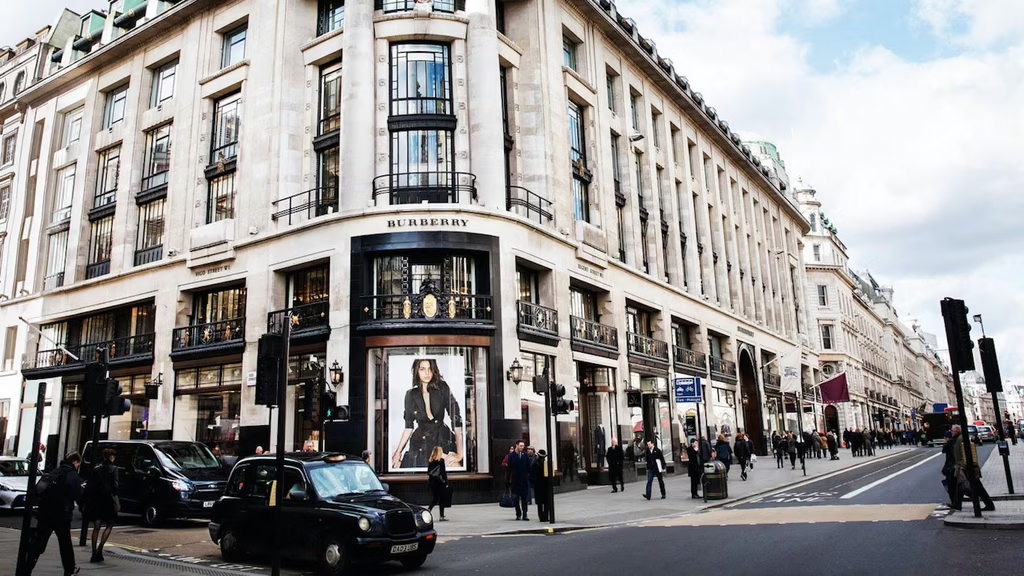
Founded in 1856, Burberry is globally synonymous with weather-resistant luxury outerwear, specifically its iconic gabardine trench coat.
The brand anchors its market position in outerwear and leather goods, leaning heavily into its “Britishness” positioning. Price points span the premium and luxury tiers, bridging heritage check motifs with modern streetwear revisions under creative leadership.
Alexander McQueen

Established in 1992 by the late Lee Alexander McQueen, the house is defined by masterclass tailoring, dark romanticism, and theatrical runway presentations.
McQueen garments marry Savile Row precision with avant-garde sculptures and intricate embroidery. Operating at the highest end of luxury pricing, the brand remains a pillar of British artistic defiance.
Vivienne Westwood

Launching from her famous 1970s King’s Road boutique, Vivienne Westwood introduced punk aesthetic codes to high fashion.
The house is famous for its pirate boots, structured corsetry, and deconstructed tartan tailoring. Westwood balanced anti-establishment ethos with timeless British eccentricity, commanding luxury-tier pricing for its runway collections.
Mulberry
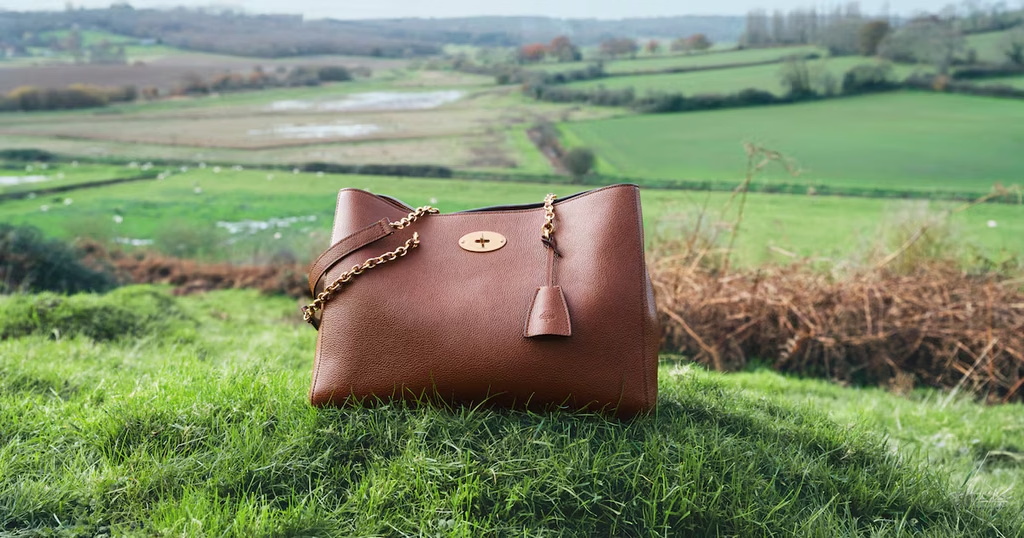
Founded in Somerset in 1971, Mulberry represents the pinnacle of British legacy leather craftsmanship. The brand is globally recognized for iconic utilitarian bags like the Bayswater, built on heavy grain leather and postman’s lock hardware.
Mulberry balances rural English heritage with functional luxury pricing, maintaining dedicated domestic manufacturing hubs in the UK.
Stella McCartney

Launched in 2001, Stella McCartney pioneered luxury vegetarian fashion, explicitly rejecting leather, fur, and feathers from day one. The brand is known for sharp, Savile Row-trained tailoring applied to conscious luxury sportswear and ready-to-wear.
Positioned firmly in the high-end luxury market, McCartney proves ethical commitments can scale commercially.
Paul Smith
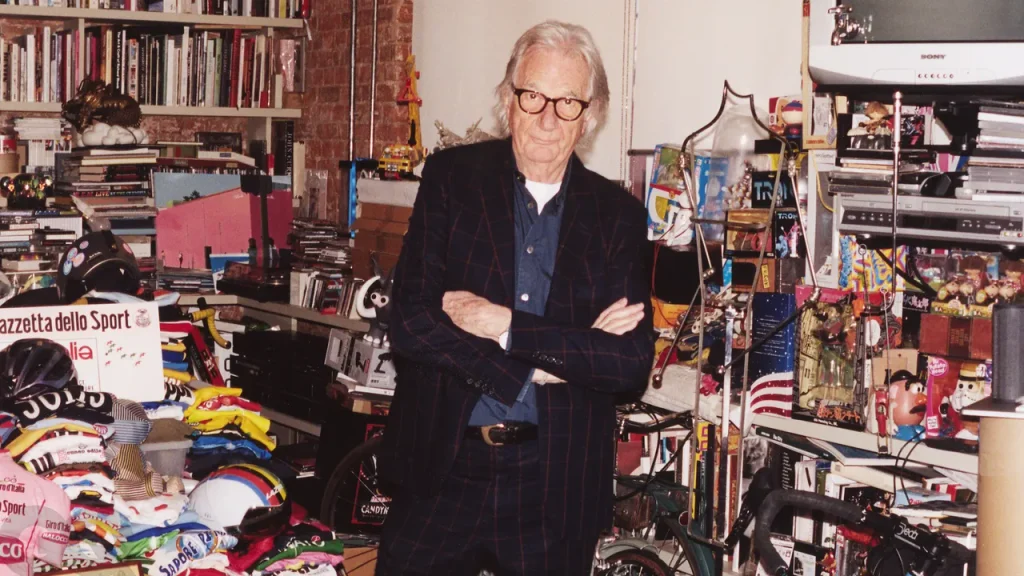
Established in 1970, Paul Smith is famous for its “classic with a twist” philosophy, injecting vibrant multi-stripe motifs into traditional British tailoring.
The brand offers accessible luxury menswear and womenswear, combining playful eccentricities with impeccable fabric sourcing and structured silhouettes.
Emerging and Contemporary British Labels
Contemporary British fashion moves fast, shaped by independent designers launching out of London Fashion Week’s NEWGEN incubator.
Labels like Chopova Lowena, known for their pleated patchwork skirts made from deadstock fabrics, redefine modern craft. Meanwhile, Ahluwalia bridges Nigerian-Indian heritage with London streetwear through textile recycling.
These rising names prove that the future of UK style belongs to designers who prioritize narrative depth and material innovation over corporate polish.
The UK Fashion Market by the Numbers
| Market Segment / Indicator | Valuation or Metric | Key Context |
| UK Fashion & Textiles Industry GVA | £26 billion annually | Contributed to the domestic economy |
| UK Apparel Market Revenue | £68.7 billion (end of 2025) | Third-largest globally behind US and China |
| Average UK Per-Capita Spending | £1,003 in 2025 | Accompanied by ~61.2 clothing pieces bought yearly |
| UK Clothing Retailing Industry | £49.4 billion (2026) | Spread across 11,261 businesses |
| Global Luxury Fashion Market | $131.7 billion (2026) | Projected to reach $238.6 billion by 2035 |
The UK apparel sector remains a retail titan despite a slight 1.6% CAGR decline in business counts between 2021 and 2026. Rising labor costs weigh heavily on operators, with 84% of UK retailers citing labor expenses as a primary business concern.
Brands must navigate these pressures while maintaining the craftsmanship consumers expect.
How British Fashion Is Responding to Sustainability
Sustainability in British fashion has evolved past superficial marketing buzzwords into measurable operational shifts.
Driven by consumer demand and tightening regulations, 73% of fashion brands were investing in circular-economy initiatives as of 2025, integrating resale, repair, and rental frameworks.
In the UK luxury sector, growing at a 3-5% CAGR, brands combine a “Made in Britain” provenance narrative with digitally verified sustainability claims. This transparency ensures buyers can track a garment’s lifecycle, separating genuine eco-conscious houses from greenwashed competitors.
Frequently Asked Questions
What are the most iconic British fashion brands?
Iconic British fashion brands include Burberry, Alexander McQueen, Vivienne Westwood, Mulberry, Stella McCartney, and Paul Smith. These houses earned global recognition by pioneering weather-resistant outerwear, bespoke tailoring, leather goods, and distinct subcultural design codes that continue to influence international style.
What makes British fashion different from other fashion cultures?
British fashion stands out due to its unique friction between rigid Savile Row tailoring traditions and anarchic subcultural movements like punk. Rather than prioritizing uniform polish, UK design embraces eccentricity, historical storytelling, and rebellious tailoring that rejects conventional symmetry.
Are British fashion brands considered luxury?
Many established British fashion houses operate squarely within the global luxury market, commanding premium price points for bespoke tailoring, handcrafted leather goods, and runway collections. However, the UK market also encompasses extensive high-street retail, creating a clear tier division between heritage luxury and mass-market commerce.
Which British fashion brand is the most globally recognized?
Burberry remains the most globally recognized British heritage brand, primarily driven by its iconic trench coat, signature check pattern, and extensive international retail footprint. It anchors the British luxury segment effectively across outerwear and accessories.
Is British fashion known for sustainability?
British fashion increasingly emphasizes sustainability through circular-economy investments and digital verification frameworks. Brands face growing pressure to adopt traceable supply chains, repair programs, and localized manufacturing narratives under the “Made in Britain” banner.
What is the difference between a heritage British brand and a UK fast-fashion retailer?
Heritage British brands focus on archival craftsmanship, traditional tailoring, and long-term product durability within luxury price tiers.
UK fast-fashion retailers prioritize rapid inventory turnover, trend replication, and accessible mass-market pricing across high-volume distribution models.
Conclusion
The enduring prestige of British fashion brands rests entirely on specialized craftsmanship, historical subversion, and structural tailoring integrity.
Whether investing in a heritage trench coat or supporting a directional London designer, understanding the distinction between marketing gloss and true lineage ensures you buy with confidence.
Explore BrassSmile’s Designer Fashion and Style & Trends coverage for deeper insights into the houses shaping modern style.