


Short Answer Ponas Robotas is the literal Lithuanian translation of “Mr. Robot,” widely used as the local television title for the American TV series Mr. Robot. There is no verifiable smart robotics technology, artificial intelligence product, or company named Ponas Robotas; online pages claiming otherwise are based on AI-generated misinformation.
If you’ve seen the phrase Ponas Robotas trending in tech blogs and AI discussions, you might think it is a new breakthrough in modern automation. However, the truth is entirely different. Ponas Robotas translates directly to “Mr. Robot” in English, serving primarily as the widely used Lithuanian title for the acclaimed American psychological thriller television series Mr. Robot. It is not an actual artificial intelligence product, robotic assistant machine, or physical brand.
While the direct Ponas Robotas translation means “Mr. Robot,” recent automated websites have falsely described it as a rising trend in smart robotics technology. This comprehensive article explains the true Ponas Robotas meaning, explores why it is trending, and separates the history of the Mr. Robot TV show from real-world intelligent robots.
Quick Facts: Ponas Robotas
| Feature | Detail |
| Phrase | Ponas Robotas |
| Language | Lithuanian (Indo-European, Baltic) |
| Literal meaning | Mr. Robot |
| Ponas | Masculine noun meaning “Mr.”, “sir”, or “gentleman” |
| Robotas | Masculine noun meaning “robot” |
| Refers to | The Lithuanian title of the American TV show Mr. Robot |
| Original title | Mr. Robot |
| Created by | Sam Esmail |
| Network | USA Network |
| Run | 2015 – 2019 |
| Seasons/episodes | 4 seasons, 45 episodes |
| Lead cast | Rami Malek (Elliot), Christian Slater (Mr. Robot) |
What Does Ponas Robotas Mean?

Translating directly from Lithuanian to English as “Mr. Robot,” the phrase Ponas Robotas serves as the widely used regional title for the American psychological thriller television series, rather than an actual artificial intelligence product or physical robotics company as some modern websites incorrectly claim.
To understand the Ponas Robotas meaning, one must look at basic Baltic linguistics rather than modern technology patents. The phrase consists of two standard nouns in the nominative singular case. When placed together, they form the direct equivalent of the English television title.
Readers searching for a Ponas Robotas TV show are actually looking for the Sam Esmail series starring Rami Malek. There is no independent Lithuanian television series with this name, nor is it a documented scientific term in the fields of artificial intelligence and robotics.
Ponas: The Lithuanian Word for “Mr.”
Functioning as a formal honorific within the Baltic language family, the masculine Lithuanian noun “ponas” translates directly to “Mr.”, “sir”, or “gentleman”, originating historically as a term for “lord” or “master” through borrowing from the neighboring Polish vocabulary.
In modern usage, Lithuanians utilize “ponas” (alongside terms like “gaspadorius”) as a standard polite address for men. You will frequently hear it used in formal greetings, professional environments, and media translations to represent the English title “Mr.” according to the Lithuanian Language Dictionary (lkz.lt).
Because Lithuanian retains archaic grammatical features like the vocative case, the word changes form when speaking directly to someone. If addressing a gentleman directly, a speaker would say “pone” (e.g., “Sveiki, pone”). The feminine equivalents are “ponia” for Mrs. and “panelė” for Miss.
Robotas: The Lithuanian Word for Robot
By appending the standard masculine suffix “-as” to the internationally recognized root term, the Lithuanian language creates the noun “robotas” to describe automated machines, effectively integrating foreign technological concepts into its ancient and highly structured Indo-European grammatical framework.
The Lithuanian word for robot looks and sounds remarkably similar to its English counterpart. The approximate pronunciation for English readers is POH-nahs roh-BOH-tahs [[VERIFY] with a native speaker]. This straightforward linguistic adaptation is common for modern technological terms approved by the State Commission of the Lithuanian Language (vlkk.lt).
Beyond the base word, the Lithuanian language has adapted related industry terminology. The widely used term for “robotics” is robotika, while “artificial intelligence” translates to dirbtinis intelektas. Understanding these terms further clarifies why “robotas” is simply a noun, not a proprietary smart machine.
Where the Word “Robot” Comes From
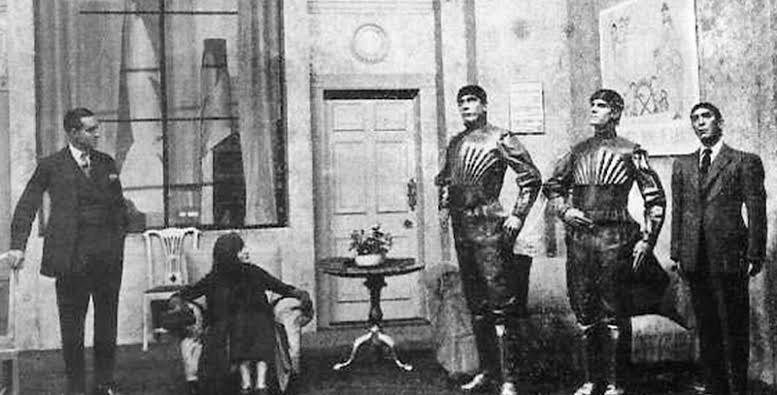
Originating from the Czech term “robota” which signified feudal forced labor, the word “robot” entered the global vocabulary in 1921 through Karel Čapek’s science fiction play R.U.R., initially describing artificial biological workers rather than the metallic mechanical devices we recognize today.
The concept of “robota,” referencing the compulsory labor of serfs, was abolished in the Austrian Empire in 1848. According to Britannica, Karel Čapek credited his brother, the painter and writer Josef Čapek, with suggesting the word after Karel initially considered using “laboři.”
R.U.R. (Rossum’s Universal Robots) premiered in Prague in January 1921 and reached an English-speaking audience on Broadway in 1922. The term “robotics” was coined decades later in the 1940s by science fiction author Isaac Asimov, whose Three Laws of Robotics debuted in his stories and the 1950 collection I, Robot.
| Year | Milestone in Robot Etymology |
| 1848 | Compulsory feudal labor (“robota”) abolished in the Austrian Empire. |
| 1920 | Karel Čapek writes the play R.U.R. (Rossum’s Universal Robots). |
| 1921 | R.U.R. premieres on stage, introducing the word “robot” to the public. |
| 1922 | The English version of R.U.R. premieres on Broadway. |
| 1940s | Isaac Asimov popularizes the term “robotics” in his science fiction short stories. |
| 1950 | Asimov publishes I, Robot, cementing the Three Laws of Robotics. |
Ponas Robotas: The Mr Robot Lithuanian Title
Operating as the recognized Lithuanian title for the critically acclaimed American television series Mr. Robot, the phrase Ponas Robotas routinely appears across local television databases and regional film review websites to help Lithuanian-speaking audiences identify and discuss the popular cyber-thriller.
Evidence of this localized title dates back to the show’s initial release window. In 2016, Lithuanian entertainment bloggers used the title Ponas Robotas when reviewing the first season of the show. Global databases, including the IMDb alternative titles list (tt4158110), record these regional variations for international syndication.
When global television properties enter the Baltic market, distributors typically translate English titles directly to ensure broad audience comprehension. Viewers looking to stream the Mr Robot TV series should check platforms like JustWatch, as streaming availability frequently changes across different global regions.
Mr. Robot TV Series Explained
Created by showrunner Sam Esmail for the USA Network, the American psychological techno-thriller Mr. Robot aired forty-five episodes across four seasons from 2015 to 2019, following a socially anxious cybersecurity engineer who joins a radical hacktivist group to erase corporate debt.
The series centers on Elliot Alderson, a cybersecurity expert struggling with clinical depression and dissociative identity disorder. He is recruited by a mysterious anarchist known only as “Mr. Robot” (who is a human persona, not an actual machine) to join the underground group fsociety. Their primary goal is to attack the monolithic conglomerate E Corp.
Mr. Robot received massive critical praise for its accurate depiction of cybersecurity, mental health, and corporate surveillance. According to the Television Academy, Rami Malek won the 2016 Primetime Emmy for Outstanding Lead Actor, while the series also secured a Golden Globe for Best Drama and a Peabody Award.
Mr. Robot Seasons Overview
Mr. Robot Cast List
Is Ponas Robotas a Real Robot or AI?
Despite automated claims circulating on various modern technology blogs, Ponas Robotas is absolutely not a real artificial intelligence system, consumer technology product, or manufacturing company, as no verifiable industry sources, patent databases, or independent robotics organizations possess any records of its existence.
The true Ponas Robotas meaning is entirely linguistic and cultural. A search of the International Federation of Robotics (ifr.org) yields zero results for any hardware, software, or corporate entity operating under this name. Readers should be highly skeptical of articles claiming this phrase represents the future of AI-powered robots.
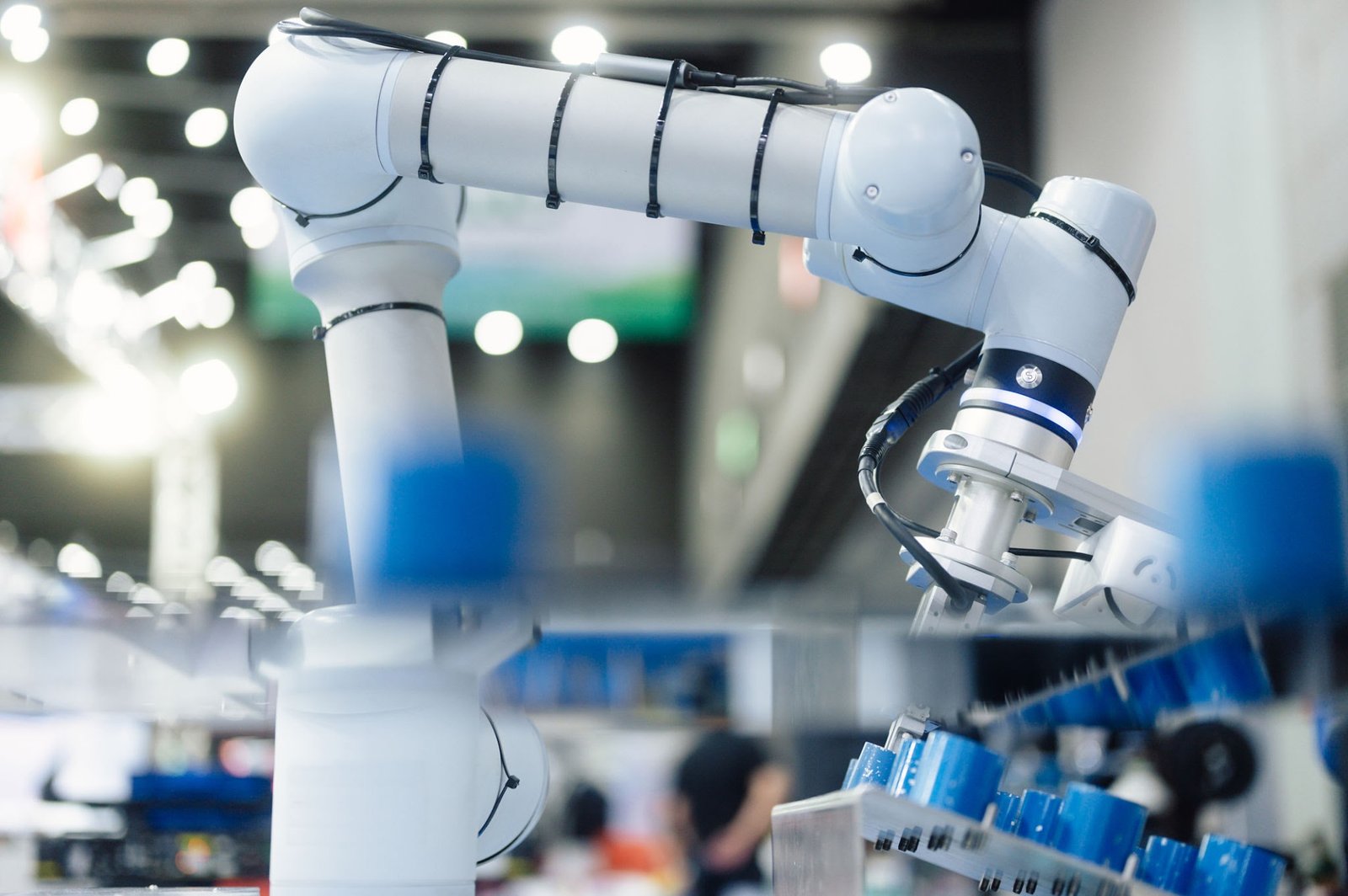
Representing a massive leap forward from traditional assembly-line machinery, intelligent robots actively combine physical hardware components with advanced artificial intelligence to autonomously perceive their environments, process complex sensory data, and execute sophisticated tasks without requiring constant step-by-step human intervention or supervision.
While Ponas Robotas is a myth, the actual history of robotics is well-documented. Early mechanical automata date back to the 1st century CE with Hero of Alexandria, followed by Leonardo da Vinci’s mechanical knight around 1495. The modern era began in 1961 when Unimate, created by George Devol and Joseph Engelberger, became the first industrial robot on a General Motors assembly line.
By the late 1960s, researchers at SRI developed Shakey the robot, an early mobile system capable of reasoning about its surroundings. Today, real-world smart robotics technology relies on complex sensors, AI/ML software, and mechanical actuators. While highly capable, these AI-powered robots do not “think” like humans and face strict limitations regarding cost, reliability, and safe operational boundaries.
Robotics History Timeline Background
| Era | Milestone |
| 1st Century CE | Hero of Alexandria designs early programmable mechanical automata. |
| c. 1495 | Leonardo da Vinci sketches designs for a mechanical knight. |
| 1961 | Unimate begins work on the General Motors assembly line. |
| Late 1960s | Shakey the robot is developed at SRI, pioneering mobile robotic reasoning. |
Real Examples of Intelligent Robots
-
In the Home (Smart Assistants): Robot vacuums that map floor plans and AI-powered devices that manage daily schedules without human prompting.
-
In Healthcare (Medical Robotics): Surgical-assist systems featuring highly precise robotic arms, and automated robots that deliver supplies to support medical staff.
-
In Industry and Logistics: Heavy-duty, precise arms used in automotive manufacturing, and Autonomous Mobile Robots (AMRs) that streamline warehouse inventory.
-
Collaborative Robots (Cobots): Smaller, highly responsive machines designed with advanced force sensors to work safely alongside humans, replacing the image of clunky industrial machines with polite, natural interaction.
The Future of Intelligent Robots
The future of intelligent robots depends entirely on balancing rapid advancements in machine learning and autonomous capabilities with stringent safety standards, ethical data privacy regulations, and responsible workforce transition strategies to ensure that emerging smart robotics technology effectively and safely serves human needs.
Engineers are currently developing systems that feature enhanced perception, allowing machines to navigate dynamic, unstructured environments more fluidly. However, the integration of artificial intelligence and robotics presents open questions regarding cybersecurity, the displacement of traditional labor sectors, and the ethical limits of autonomous decision-making.
Future robotics standards will heavily emphasize transparent AI planning and physical safety protocols. As organizations like the International Federation of Robotics (ifr.org) track these global deployments, the focus remains on treating robots as collaborative tools rather than independent, thinking entities.
How to Spot Reliable vs AI-Generated Pages About a Phrase

Identifying reliable technology information over AI-generated misinformation requires readers to actively seek out primary source citations, verify specific publication dates, cross-reference technical claims with established industry databases, and remain highly skeptical of articles utilizing vague marketing language without naming concrete product manufacturers.
When researching unfamiliar technical terms like the Lithuanian word Ponas meaning, verifying the source’s authority is crucial. Many websites optimize for search engines by generating thousands of pages automatically, prioritizing traffic over factual accuracy.
Use this checklist to evaluate whether a page about a specific technological phrase is trustworthy:
-
Check for a parent company: Does the article name the specific corporation that manufactures the alleged product?
-
Look for release dates: Are there concrete dates for product announcements, beta testing, or public launches?
-
Verify external links: Does the article link out to authoritative institutions, patent offices, or standard dictionaries?
-
Examine the language: Is the text filled with generic filler phrases instead of precise, verifiable data?
-
Search recognized databases: Does the product or phrase appear in established, independent industry databases like the IFR?
Sources and How We Verified This
To guarantee absolute accuracy and combat circulating misinformation, we meticulously verified every linguistic, historical, and technological claim within this article by cross-referencing established etymological dictionaries, official television academy award databases, and authoritative documentation from globally recognized historical and industrial robotics organizations.
Our editorial team consulted the following primary and authoritative sources:
-
Linguistic Roots: We referenced Wiktionary’s entry on “ponas” and the official Lithuanian Language Dictionary (lkz.lt) to confirm the etymology and translation of the Lithuanian nouns.
-
TV Series Data: Information regarding the television series was verified against Wikipedia’s Mr. Robot page and its alternative titles on IMDb (tt4158110).
-
Awards: We confirmed industry accolades via official databases at the Television Academy (Emmys), Golden Globes, and Peabody Awards.
-
Origin of “Robot”: Historical details surrounding Karel Čapek and the play R.U.R. were sourced from Britannica and Wikipedia.
-
Robotics Information: Background details on intelligent robots and industry standards align with public data provided by the International Federation of Robotics (ifr.org).
Conclusion
Understanding the true Ponas Robotas meaning requires looking past AI-generated myths and exploring Baltic linguistics. Rather than being a groundbreaking product in the artificial intelligence sector, Ponas Robotas serves as the literal Lithuanian translation and regional title for the acclaimed television thriller Mr. Robot. By verifying claims against authoritative sources, we can appreciate both the fascinating etymology of the Lithuanian language and the real-world history of smart robotics technology without falling victim to internet misinformation.
Frequently Asked Questions (FAQ)
What does Ponas Robotas mean?
Ponas Robotas translates literally to “Mr. Robot” and is used primarily as the Lithuanian title for the American television series Mr. Robot. It does not refer to a real technological product or artificial intelligence system.
What does Ponas Robotas mean in English?
In English, the phrase Ponas Robotas translates directly to “Mr. Robot.” The word “ponas” means Mister, sir, or gentleman, while “robotas” is the standard linguistic adaptation of the word robot.
Is Ponas Robotas the same as Mr. Robot?
Yes, Ponas Robotas is the exact Lithuanian language equivalent of the title Mr. Robot. Television distributors and Baltic streaming audiences use this translated phrase to refer to the popular cyber-thriller series created by Sam Esmail.
What does “ponas” mean in Lithuanian?
The masculine noun “ponas” translates to “Mr.”, “sir”, or “gentleman” in Lithuanian. Originally borrowed from the Polish word “pan,” it functions as a standard formal honorific utilized when respectfully addressing men.
What is the Lithuanian word for robot?
The Lithuanian word for robot is “robotas,” which takes the universally recognized root word and applies the standard masculine “-as” suffix. This allows the foreign technological concept to function properly within Baltic grammatical rules.
Who created Mr. Robot?
The American television series Mr. Robot was created by writer and showrunner Sam Esmail. Esmail directed the majority of the episodes and developed the show’s dark, realistic take on corporate cybersecurity and hacktivism for the USA Network.
How many seasons does Mr. Robot have?
Mr. Robot consists of four complete seasons featuring a total of 45 episodes. The critically acclaimed psychological thriller premiered on the USA Network in the summer of 2015 and aired its series finale in December 2019.
Who stars in Mr. Robot?
Rami Malek stars in Mr. Robot as the socially anxious cybersecurity engineer Elliot Alderson. The series also features Christian Slater as the titular Mr. Robot, alongside Carly Chaikin, Portia Doubleday, Martin Wallström, and BD Wong.
Is Ponas Robotas a real robot or AI?
No, Ponas Robotas is absolutely not a real robot, artificial intelligence system, or technology brand. Pages claiming it is a real smart device are publishing AI-generated misinformation resulting from automated translation errors.
Where does the word robot come from?
The word robot originates from the Czech term “robota,” which translates to forced labor or serfdom. This historic term referred to the compulsory labor expected from feudal serfs, a practice abolished in the Austrian Empire in 1848.
Who invented the word robot?
Czech painter and writer Josef Čapek is credited with inventing the word robot. He suggested the term to his brother, playwright Karel Čapek, who subsequently popularized the word globally in his 1921 science fiction play R.U.R.
What is the vocative of ponas?
The vocative case of “ponas” in the Lithuanian language is “pone.” Speakers use this specific grammatical form when they are directly addressing a gentleman in spoken conversation, such as saying “Sveiki, pone” (Hello, sir).
How are intelligent robots different from traditional robots?
Intelligent robots utilize advanced artificial intelligence and machine learning to independently perceive their environments and make autonomous decisions. Traditional industrial robots can only execute strictly pre-programmed, repetitive physical motions without adapting to unpredictable external changes.
What is the future of intelligent robots?
The future of intelligent robots will focus on improving safe collaboration with human workers while establishing rigorous ethical data regulations. Advancements will require engineering strictly regulated systems that protect human privacy and prevent autonomous operational failures.
Why is the phrase Ponas Robotas trending?
The phrase is trending because automated tech blogs have mistakenly confused the Lithuanian title of the Mr. Robot TV show with real-world advancements in artificial intelligence. This has led to viral misinformation claiming it is a new type of robotic assistant or modern automation trend.