

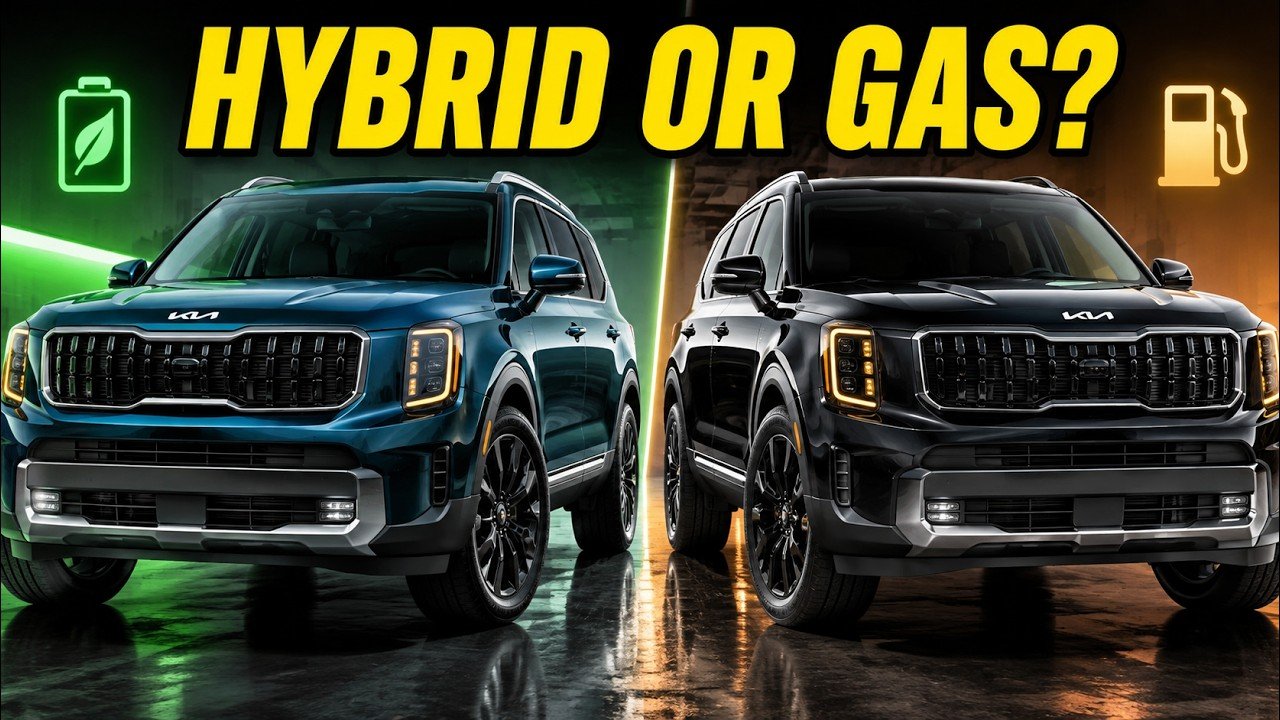
The shift toward electrified luxury vehicles is no longer just about environmental stewardship it is a smart financial decision. Modern drivers evaluating the premium segment face a clear question: Does a luxury hybrid SUV actually cost less to own than a traditional gas SUV?
At BrassSmile, our philosophy centers on informed luxury over pure spending. True prestige lies in making intelligent decisions that balance peak performance with long-term value. While traditional gas models usually carry a lower upfront sticker price, luxury hybrid SUVs (HEVs) and plug-in hybrids (PHEVs) offset their initial cost through dramatic fuel savings, reduced mechanical wear, and surprisingly resilient resale values.
Understanding total ownership costs clarifies which powertrain offers superior value over a standard 5-year driving window.
1. Upfront Purchase Price & Depreciation Patterns
The financial evaluation begins at the dealership floor.
-
Gas Luxury SUVs: Traditional combustion models carry a lower initial price tag. Entry-level premium gas SUVs generally start $4,000 to $9,000 below their hybrid counterparts. Lower upfront costs translate to smaller down payments and slightly lower monthly finance charges.
-
Luxury Hybrid & PHEV SUVs: Premium hybrid vehicles command higher prices due to advanced battery architectures, dual-powertrain engineering, and electric drive motors. However, plug-in hybrids often qualify for regional incentive programs or corporate fleet tax credits that narrow this initial gap.
Resale Value Trajectory
Depreciation represents the single largest cost of vehicle ownership.
Data from automotive valuation experts at iSeeCars highlights that luxury hybrid SUVs retain higher residual value after 36 to 60 months than equivalent gas-only models. Used luxury car shoppers actively seek fuel-efficient options, which protects hybrid owners from the steep value drops typical of high-displacement V6 and V8 gas engines.
2. Luxury SUV Fuel Economy: Analyzing Real-World Efficiency
Fuel expenses present the clearest financial distinction between gas and hybrid powertrains.
Traditional medium-to-full-size luxury gas SUVs average 18 to 22 MPG on premium fuel. By comparison, luxury hybrid SUVs regularly deliver 30 to 38 MPG combined by utilizing regenerative braking and operating on pure electric power during low-speed city traffic.
Annual Fuel Cost Comparison
-
Gas Luxury SUV: $2,800 – $3,600 / year
-
Hybrid Luxury SUV: $1,600 – $2,200 / year
-
Plug-In Hybrid (PHEV) SUV: $900 – $1,400 / year (plus residential electricity)
Plug-In Hybrid (PHEV) Advantage
A detailed plug-in hybrid luxury SUV comparison underscores a major financial advantage: all-electric commuting range.
Most modern PHEV luxury SUVs deliver 30 to 55 miles of pure electric driving per charge. Owners who utilize home charging setups for daily commutes run almost entirely on electricity, reserving gasoline for longer trips. For more insights on blending modern tech into elevated living, explore our analysis of 2026 modern luxury living trends.
3. Maintenance, Brakes, and Repair Expenses
A common concern among luxury buyers is whether hybrid systems are significantly more expensive to service due to added powertrain complexity. Long-term owner data compiled by Edmunds True Cost to Own (TCO) reveals that routine maintenance costs actually favor hybrid vehicles over a 5-year ownership period.
| Maintenance Factor | Traditional Gas Luxury SUV | Luxury Hybrid / PHEV SUV |
| Brake Wear Replacement | High (Every 30,000 – 45,000 miles) | Low (Regenerative braking saves pad wear up to 70,000+ miles) |
| Engine & Oil Service | Standard interval requirement | Reduced combustion stress during EV mode |
| Long-Term Repair Risk | Lower complexity out of warranty | Higher out-of-warranty complexity |
| Insurance Rates | Standard premium luxury baseline | 3% to 7% higher due to specialized replacement parts |
-
Regenerative Braking Savings: Hybrids use electric motor resistance to slow the vehicle down before engaging physical brake pads. Consequently, brake rotors and pads on luxury hybrid SUVs last up to twice as long, saving over $1,200 in brake service over five years.
-
Component Longevity: Starters and alternators are replaced by electric generator units in hybrid powertrains, removing two frequent failure points.
-
Battery Durability Warranty: High-voltage hybrid batteries are backed by mandatory manufacturer warranties (typically 8 to 10 years or 100,000 miles), shielding early owners from battery replacement expenses.
4. 5-Year Total Cost of Ownership (TCO) Breakdown
Combining purchase price, fuel costs, scheduled maintenance, insurance, and residual value yields the true 5-year financial calculation:
| Expense Category (5-Year / 75,000 Mi) | Gas Luxury SUV | Hybrid Luxury SUV | Plug-In Hybrid (PHEV) Luxury SUV |
| Average Purchase Price | $62,000 | $67,000 | $72,000 |
| 5-Year Fuel Costs | $15,500 | $9,200 | $5,800 (+$1,500 Electric) |
| Maintenance & Service | $4,800 | $3,900 | $4,100 |
| Estimated Depreciation | -$34,100 | -$31,500 | -$32,400 |
| Net 5-Year Cost to Own | ~$52,400 | ~$48,600 | ~$51,000 |
To learn more about current high-end automotive releases, read our complete 2026 luxury cars guide.
Final Verdict: Which Costs Less to Own?
The Luxury Hybrid SUV emerges as the overall cost winner for most buyers over a standard 5-year ownership period.
-
Choose a Luxury Hybrid SUV if: You log over 12,000 miles annually, spend significant time driving in city traffic, and want lower total running costs without altering your daily driving habits or installing home chargers.
-
Choose a Plug-In Hybrid (PHEV) SUV if: You have reliable home charging access, keep daily commutes under 40 miles, and prefer EV commuting with unlimited long-distance driving range.
-
Choose a Gas Luxury SUV if: You prioritize the lowest initial purchase price, plan to trade your vehicle within 24 to 36 months, or require maximum towing capacity and mechanical simplicity.
For more expert reviews and editorial insights across high-end lifestyle verticals, visit the BrassSmile Blog or read about BrassSmile to explore our vision.