


You spot three friends on Saturday: two are logging 8km runs to prep for a race format, while another is practicing heavy snatch balance reps at a local affiliate. You want to level up your own conditioning, but you are stuck choosing between the standardized endurance race and the unpredictable barbell workout.
Choosing between HYROX vs CrossFit comes down to how your body handles specific physiological stress [ADD YOUR OWN COACHING/TRAINING OBSERVATION HERE].
This breakdown compares both formats directly across workout structure, muscle building, cardiovascular demands, recovery cost, and overall injury risk. You will get clear verdicts for individual fitness goals, realistic training costs, and a guide on whether you can combine both methodologies safely.
Quick Summary
Quick Answer: The debate over HYROX vs CrossFit comes down to predictability versus variety. HYROX is a standardized fitness race featuring 8 × 1 km runs and 8 movement stations, making it superior for aerobic endurance and repeatable pacing. CrossFit relies on constantly varied movements, heavier barbells, and complex gymnastics, making it better for maximal strength, power, and broad skill development.
Best Pick by Goal
| Goal | Better Fit | One-Line Reason |
| Maximal Strength | CrossFit | Utilizes heavy Olympic weightlifting and varied barbell work to build top-end power. |
| Aerobic Endurance | HYROX | Features 8 km of total running paired with high-volume, lower-complexity functional stations. |
| Fat Loss | Tie | Both drive high calorie expenditure; sustainable dietary consistency and overall work volume decide long-term fat loss. |
| Beginners | HYROX | Simple, fixed movements remove the steep learning curve required for high-skill barbell and gymnastics exercises. |
| Variety & Skill | CrossFit | Daily workouts constantly change, testing everything from rope climbs and handstand walks to heavy cleans. |
Key Takeaways
-
HYROX tests predictable endurance through standardized running and repetitive functional exercise stations during every race.
-
CrossFit builds superior maximal strength and explosive power through heavy barbell lifting and gymnastics skills.
-
Endurance capacity improves faster with HYROX due to its compulsory eight kilometers of structured running.
-
Beginners adapt quicker to HYROX because the exercises require minimal technical skill or movement mastery.
-
Financial costs vary, with CrossFit charging higher monthly box fees while HYROX requires individual event entries.
-
Combining both formats works well if you carefully manage weekly recovery and total training volume.
HYROX vs CrossFit Differences at a Glance

Quick Answer: Key HYROX vs CrossFit differences center on workout predictability, technical skill demands, and energy systems. HYROX demands steady-state aerobic pacing over a fixed course, while CrossFit prioritizes high-skill gymnastics, heavy Olympic weightlifting, and anaerobic power output across ever-changing daily workouts.
What Is HYROX?
First held in Hamburg, Germany, in 2017 with roughly 650 participants, HYROX expanded to over 1.5 million athletes across the 2025/26 season. The event strictly couples 8 × 1 km runs with 8 standardized functional exercise stations.
What Is CrossFit?
Founded in 2000 by Greg Glassman, CrossFit defines its model as constantly varied functional movements performed at high intensity. Its flagship competitive stage, the CrossFit Games, launched in 2007 [VERIFY on crossfit.com].
Core Fitness Benefits Compared
HYROX Fitness Benefits:
-
Aerobic Engine: Builds a resilient cardio base by combining total running volume with sustained machine work.
-
Muscular Endurance: Enhances fatigue resistance through high-rep sled pushes, wall balls, and lunges.
-
Pacing Mastery: Teaches precise energy management during prolonged, continuous athletic efforts.
CrossFit Fitness Benefits:
-
Maximal Power: Develops explosive strength and speed via heavy barbell clean-and-jerks and snatches.
-
Gymnastic Skill Range: Builds upper-body control through handstand push-ups, muscle-ups, and rope climbs.
-
Broad Adaptability: Prepares your mind and body to respond effectively to completely random physical tests.
Workout Structure and Competition Format

Quick Answer: Comparing workout structure and competition format shows a clear split: HYROX relies on a repeatable 8km race blueprint, whereas CrossFit varies every daily workout (WOD) and runs an official season through the CrossFit Open, Quarterfinals, and Games.
Format Comparison
| Factor | HYROX | CrossFit |
| Format | Standardized 8 km run interspersed with 8 fixed functional stations. | Constantly varied daily workouts mixing lifting, gymnastics, and cardio. |
| Typical Session | Station skill practice, running intervals, and long aerobic engine blocks. | Warm-up, heavy strength or skill practice, and a high-intensity WOD. |
| Competition | Single-day mass participation event open to all fitness levels. | Multi-stage season: CrossFit Open, Quarterfinals, Semifinals, and Games. |
| Scoring | Total elapsed chip time from start line to final wall ball rep. | Reps completed in a set time limit (AMRAP) or time taken (For Time). |
| Who Competes | Beginners, weekend racers, elite athletes, and relay teams. | Broad box community up to world-class functional fitness athletes. |
| Predictability | High: same course, movements, and sequence every single time. | Low: workout details change daily to test complete adaptability. |
The HYROX Race, Station by Station
-
1 km Run + 1,000 m SkiErg: Sets your early heart rate ceiling.
-
1 km Run + 50 m Sled Push: Heavy leg drive that exhausts the quads early.
-
1 km Run + 50 m Sled Pull: Heavy upper-body pull testing grip strength and hamstrings.
-
1 km Run + 80 m Burpee Broad Jumps: Full-body aerobic spike with core impact.
-
1 km Run + 1,000 m Rowing: Low-impact endurance challenge testing posterior chain stamina.
-
1 km Run + 200 m Farmers Carry: Severe forearm, trap, and grip endurance check.
-
1 km Run + 100 m Sandbag Lunges: Unilateral leg burn under heavy systemic fatigue.
-
1 km Run + 100 Wall Balls: Final test of squat depth, shoulder capacity, and mental grit.
(Note: Station loads vary by division, ranging from 102 kg to 202 kg for the sled push; [VERIFY weights on hyrox.com]).
How CrossFit Workouts Are Built
-
Dynamic Warm-Up & Mobility: Prepares joint positions for deep squatting, overhead pressing, and explosive hips.
-
Strength or Skill Segment: Focuses on maximal barbell lifts (e.g., 5×3 back squats) or gymnastics technique work.
-
Metabolic Conditioning (WOD): High-intensity finisher structured as AMRAP (as many rounds as possible), EMOM (every minute on the minute), or For Time.
Exercises, Running Requirements and Gym Equipment

Quick Answer: The technical barrier and facility demands set these two sports apart. HYROX uses fixed, low-skill movements and continuous running that can be simulated in standard commercial gyms, whereas CrossFit demands specialized affiliate facilities equipped with weightlifting platforms, pull-up rigs, and gymnastics gear.
Exercises
Understanding HYROX vs CrossFit exercises is crucial before picking a program. One format relies on simple locomotion under load, while the other demands technical movement mastery.
HYROX Movements:
-
Sled pushes and pulls
-
1000m SkiErg and Concept2 rowing
-
Sandbag walking lunges
-
Farmers carries with kettlebells or dumbbells
-
Burpee broad jumps and wall balls
CrossFit Movements:
-
Olympic weightlifting (snatches, clean and jerks)
-
Heavy powerlifting (deadlifts, back squats, overhead presses)
-
High-skill gymnastics (muscle-ups, chest-to-bar pull-ups, rope climbs)
-
Inverted bodyweight work (handstand walks, handstand push-ups)
-
Plyometrics (box jumps, double-under jump rope passes)
Running Requirements
The specific running requirements make up the backbone of a HYROX race, accumulating a total distance of 8 km broken into eight 1 km intervals between functional stations. If your aerobic engine or foot strike durability is lacking, race day will feel long.
However, for beginners, walking intervals during early 1 km runs are a normal strategy used to manage heart rate spikes before tough stations like the sled push.
CrossFit treats running as one of many conditioning variables. You will encounter short 200m to 800m sprints inside daily WODs, but running is frequently swapped for air bikes, Concept2 rowers, or jump ropes depending on programming.
Gym Equipment
Depending on gym equipment availability at your local gym, training for either sport requires different gear setups.
| Equipment Item | HYROX Prep | CrossFit Setup |
| Weight Sled & Turf Lane | Essential for push and pull stations. | Optional; used occasionally in conditioning. |
| SkiErg & Air Rower | Standard Concept2 machines required. | Very common in standard box workouts. |
| Wall Balls & Target | Essential; 100 reps to target heights. | Essential; standard WOD movement. |
| Sandbags & Kettlebells | Required for lunges and carries. | Standard equipment in all affiliates. |
| Barbell & Bumper Plates | Optional; used mainly for strength base. | Essential; backbone of daily programming. |
| Pull-Up Rig & Rings | Not used in competition. | Essential for gymnastics and suspensions. |
Training Intensity and Recovery Time

Quick Answer: Differences in training intensity and recovery time come down to structural load versus systemic fatigue. CrossFit pushes short, near-maximal efforts using heavy barbells that stress joints and central nervous systems, while HYROX involves sustained, submaximal running and functional work that creates total-body metabolic exhaustion.
Stress and Recovery Breakdown
| Factor | HYROX Training | CrossFit |
| Typical Effort Pattern | Long, sustained, submaximal aerobic zones with localized muscular burning. | Short, near-maximal anaerobic bursts paired with heavy structural loading. |
| Main Fatigue Source | High total work volume, repetitive foot-strike impact, and glycogen depletion. | Central nervous system fatigue, heavy spinal loading, and joint strain. |
| Common Recovery Need | Active recovery runs, tissue mobilization, and carbohydrate replenishment [VERIFY: ACSM recovery guidelines]. | Joint rest, targeted nervous system recovery, and soft tissue repair [VERIFY: NSCA guidance]. |
Practical Recovery Rules
-
Prioritize Sleep: Target 7-9 hours per night to maximize tissue repair and hormone regulation during heavy training blocks [VERIFY: CDC sleep recommendations].
-
Schedule Easy Days: Keep light zone 2 cardio or passive rest days built into your week to avoid overtraining.
-
Plan Deload Weeks: Reduce weekly training volume by 30–50% every 4 to 6 weeks to allow long-term joint and tendon adaptation.
Individual recovery capacity depends on your age, training history, nutrition, and daily stress levels [VERIFY: ACSM fitness guidelines]. If you ever experience extreme, unusual muscle pain, significant swelling, or dark urine after an intense workout, stop training immediately and seek urgent medical evaluation, as these are warning signs of exertional rhabdomyolysis.
HYROX vs CrossFit for Strength and Muscle Building
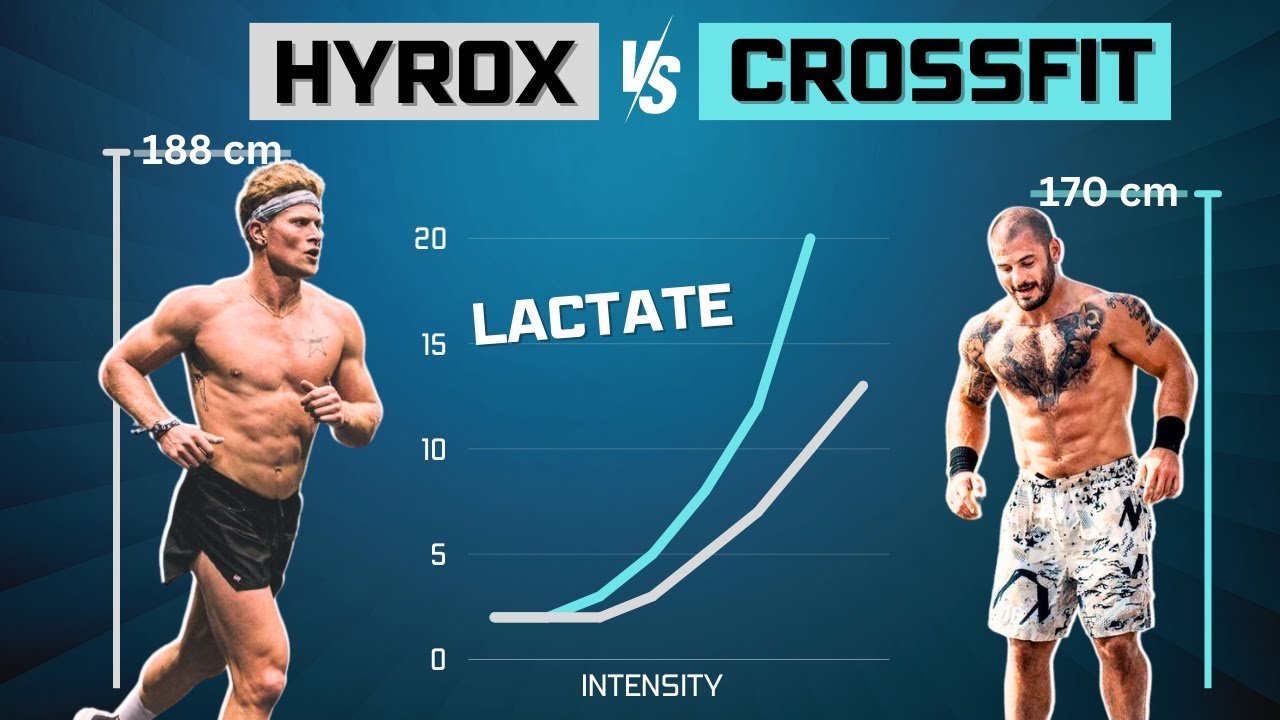
Quick Answer: HYROX vs CrossFit for strength comes down to maximal power versus durability under fatigue. CrossFit builds superior top-end maximal strength through heavy barbell work and complex gymnastics. HYROX focuses on muscular endurance using fixed, moderate loads designed for sustained output over an extended duration.
How Each Format Builds Strength and Muscle
-
Why CrossFit Drives Maximal Strength: Daily programming regularly includes heavy primary lifts like back squats, deadlifts, overhead presses, and Olympic weightlifting, which stimulate high-threshold motor units.
-
Why HYROX Is Limited for Max Strength: Sleds and wall balls build incredible fatigue resistance, but fixed event loads do not provide the progressive overload needed to maximize absolute 1-rep-max strength.
-
Requirements for Muscle Building: Effective muscle building in both disciplines relies heavily on total weekly training volume, progressive tension, adequate calorie intake, and sufficient protein consumption [VERIFY: ISSN protein guidelines].
-
The Reality of Pure Hypertrophy: Neither sport functions as a pure bodybuilding program; both prioritize athletic performance over isolated physique development [ADD YOUR OWN COACHING/TRAINING OBSERVATION HERE].
Strength Breakdown
| Strength Quality | Better Fit | Why |
| Maximal Strength | CrossFit | Utilizes heavy barbells and powerlifting movements near maximal capacity. |
| Muscular Endurance | HYROX | Demands hundreds of reps under fatigue (e.g., 100 wall balls and 80m burpee broad jumps). |
| Skill & Olympic Lifts | CrossFit | Integrates technical snatches, cleans, and gymnastics into high-intensity conditioning. |
| Hypertrophy | Tie | Both stimulate muscle growth, provided nutrition and mechanical tension are optimized. |
HYROX vs CrossFit for Endurance and Cardiovascular Fitness
Quick Answer: Measuring HYROX vs CrossFit for endurance comes down to continuous output versus interval power. HYROX builds a superior aerobic base through mandatory 8 km running paired with steady-state stations. CrossFit develops high-intensity cardiovascular fitness by driving your heart rate to near-maximal thresholds during explosive interval efforts.
-
Dedicated 8 km Running Base: The continuous running loops in HYROX build structural joint endurance, capillary density, and sustained aerobic capacity that translate to long-distance athletic stamina.
-
Realistic Race Durations: Average finish times hover around 1h35m for men and 1h38m for women (based on UK race data from Village Gym, Feb 2026), requiring steady zone 3 energy pacing over an extended duration.
-
High-Intensity Interval Capacity: CrossFit daily WODs frequently target anaerobic thresholds through short 8-to-20-minute blasts, developing rapid heart rate recovery and high VO2 max power output.
-
Meeting Health Benchmarks: Both training styles comfortably exceed the World Health Organization guideline of 150–300 minutes of moderate or 75–150 minutes of vigorous aerobic activity per week [VERIFY on who.int].
While both disciplines deliver exceptional adaptations for cardiovascular fitness, long-term heart health and stamina rely far more on your overall weekly consistency than on which specific gym door you enter.
HYROX vs CrossFit for Fat Loss and Weight Loss
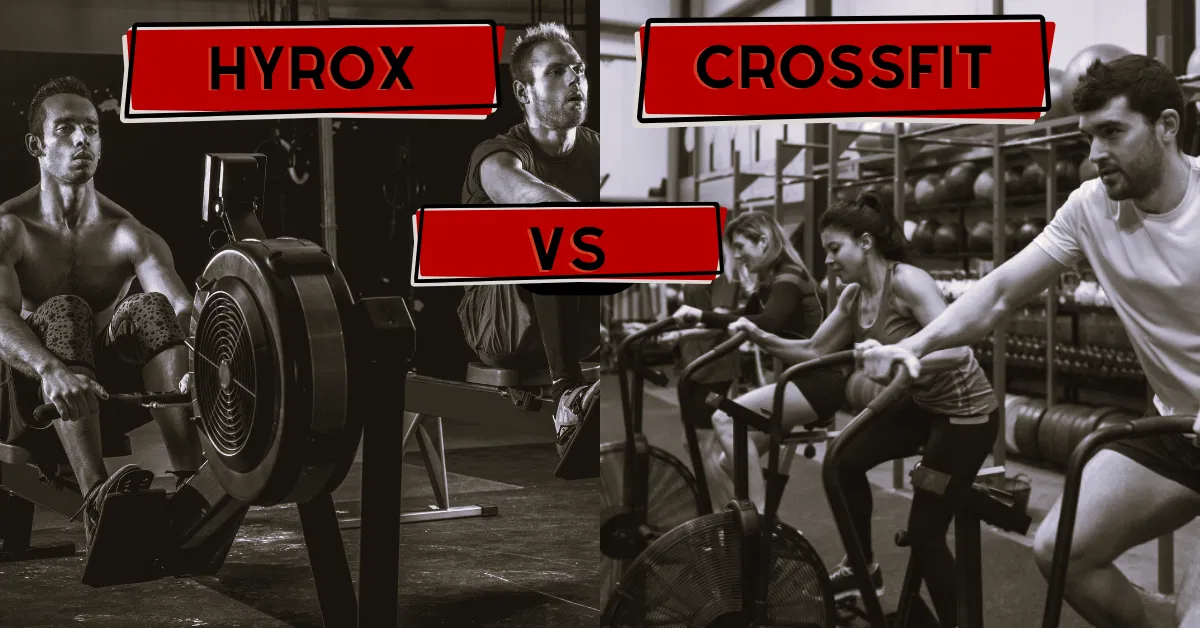
Quick Answer: Comparing HYROX vs CrossFit for fat loss comes down to total energy expenditure versus muscle preservation. Neither program is inherently magical for weight loss. Sustainable body composition changes depend on maintaining an energy deficit, total weekly activity, adequate sleep, and consistent nutrition [VERIFY: CDC weight management guidelines]. The better format is simply the one you enjoy enough to show up for 3 to 4 times a week.
How Each Format Supports Body Composition
-
HYROX Volume & Calorie Burn: The long duration of race prep and compulsory 8 km running naturally generate high total weekly work volume and sustained energy expenditure.
-
CrossFit Muscle Preservation: Heavy resistance training and barbell work help preserve lean muscle tissue during a calorie deficit, keeping your resting metabolic rate higher over time [VERIFY: ACSM resistance guidelines].
-
Work Capacity & EPOC: Both styles drive significant post-exercise oxygen consumption (EPOC), helping you build functional conditioning while managing total body composition.
-
Adherence & Habit Building: Choose the environment—structured endurance or community-driven daily variety—that keeps you consistent month after month.
Before starting any high-intensity program or energy-restricted diet for fat loss, talk to a doctor or qualified dietitian, especially if you have underlying health conditions. Avoid severe, extreme dieting strategies that compromise your recovery and athletic performance.
HYROX vs CrossFit for Beginners
Quick Answer: Choosing between HYROX vs CrossFit for beginners comes down to movement simplicity versus initial coaching oversight. HYROX is usually easier to start because the functional stations rely on basic, repeatable movement patterns, though accumulating 8 km of running poses a clear hurdle. CrossFit offers structured coaching and scalable loads, but presents a much steeper technique learning curve.
Beginner Factor Comparison
| Beginner Factor | HYROX | CrossFit |
| Technique Learning Curve | Low: sled pushing, rowing, and lunging require minimal technical mastery. | High: Olympic lifts (snatches, cleans) and gymnastics take months to learn safely. |
| Injury-Risk Drivers | Overuse tendon issues and joint fatigue from accumulating high weekly running volume. | Poor technique under fatigue on complex barbell or gymnastics movements. |
| Scaling Options | Adjust running pace, walk intervals, or reduce station weights [VERIFY weights on hyrox.com]. | Substitute movements (e.g., ring rows for pull-ups, lighter PVC pipe for barbells). |
| First-Month Focus | Building a steady aerobic base and developing basic leg/grip stamina. | Learning foundational barbell mechanics and safe movement standards. |
First 8 Weeks Advice for Beginners
-
Master Mechanics First: Focus on basic movement patterns like squatting, hinge mechanics, and proper running posture before increasing workout intensity or adding heavy loads.
-
Build Running Volume Gradually: If you choose HYROX, increase your weekly running distance slowly to allow your knees, ankles, and Achilles tendons time to adapt.
-
Prioritize Consistency Over Pace: Avoid comparing your early workout times to experienced gym members; focus on completing scheduled sessions safely without pushing into extreme fatigue.
Whatever route you select, work directly with a certified coach during your first month to review your movement mechanics, scale workouts appropriately, and reduce your risk of injury.
HYROX vs CrossFit Training Costs
Quick Answer: Direct training costs differ between recurring gym fees and single event fees. Based on UK market benchmarks, a CrossFit box membership typically requires higher monthly recurring costs, whereas HYROX training can be completed in standard commercial gyms, shifting your main expense toward event registration fees.
Expense Breakdown
| Cost Item | HYROX | CrossFit |
| Monthly Training | £20–£80/month (standard gym membership with functional area or basic HYROX partner access). | £70–£250/month (dedicated affiliate box membership with full group coaching). |
| Per-Session Drop-In | £10–£20 (commercial gym day pass) or £25–£30 (specialized partner studio). | £20–£25 (standard affiliate box drop-in rate). |
| Event / Competition Fee | £65–£150 per race entry (varies by division: Open, Pro, Doubles, Relay). | Free for the internal CrossFit Open; paid entry for local throwdowns or major events. |
| Special Gear | Running shoes and optional weightlifting/turf shoes. | Weightlifting shoes, gymnastics hand grips, speed jump rope, and knee sleeves. |
(Note: Figures are UK examples and vary significantly by country, metro area, and specific club setup).
Joining premium boutique functional fitness studios, taking dedicated coaching prep courses, or adding extensive travel and hotel logistics for race weekends will quickly escalate total annual expenses in either sport.
Which Is Better for Athletic Performance and Overall Fitness?
Quick Answer: Choosing the superior format for athletic performance comes down to your personal definition of conditioning. HYROX builds high-volume aerobic durability and repeatable pacing, while CrossFit develops maximal multi-planar power, structural strength, and broad movement versatility.
Comprehensive Comparison Matrix
| Goal / Feature | HYROX | CrossFit | Edge |
| Maximal Strength | Submaximal fixed loads; limited top-end loading. | Heavy powerlifting and Olympic barbell work. | CrossFit |
| Aerobic Endurance | Mandatory 8 km running paired with continuous ergs. | Variable short runs and sprint intervals. | HYROX |
| Fat Loss | Sustained high total volume and total energy output. | Resistance training that preserves lean muscle mass. | Tie |
| Beginners | Low technical entry barrier; simple movement patterns. | Requires long technique ramp-up and coaching. | HYROX |
| Skill & Movement Variety | Fixed, predictable 8-station race format. | Constantly varied gymnastics, lifting, and cardio. | CrossFit |
| Training Costs | Can be prepped in standard commercial gyms. | Premium monthly affiliate box membership fees. | HYROX |
| Race Clarity | Identical global course, order, and scoring. | Varied competition formats and complex scaling. | HYROX |
| Overall Fitness | Exceptional engine and muscular stamina. | Total athletic balance across power, speed, and skill. | Depends |
The Honest Verdict by Athlete Type
-
For Dedicated Runners and Endurance Athletes: HYROX delivers the ideal functional extension to your training, building localized muscle stamina while enhancing your total aerobic base.
-
For Lifters and Strength Enthusiasts: CrossFit provides the complex physical challenge you want, driving true maximal strength, upper-body gymnastics, and explosive power output.
-
For General Fitness Seekers: Choose the community and structure you enjoy most—HYROX offers simple, measurable event goals, while CrossFit guarantees daily variety so you never get bored.
Can You Train for HYROX and CrossFit Together?
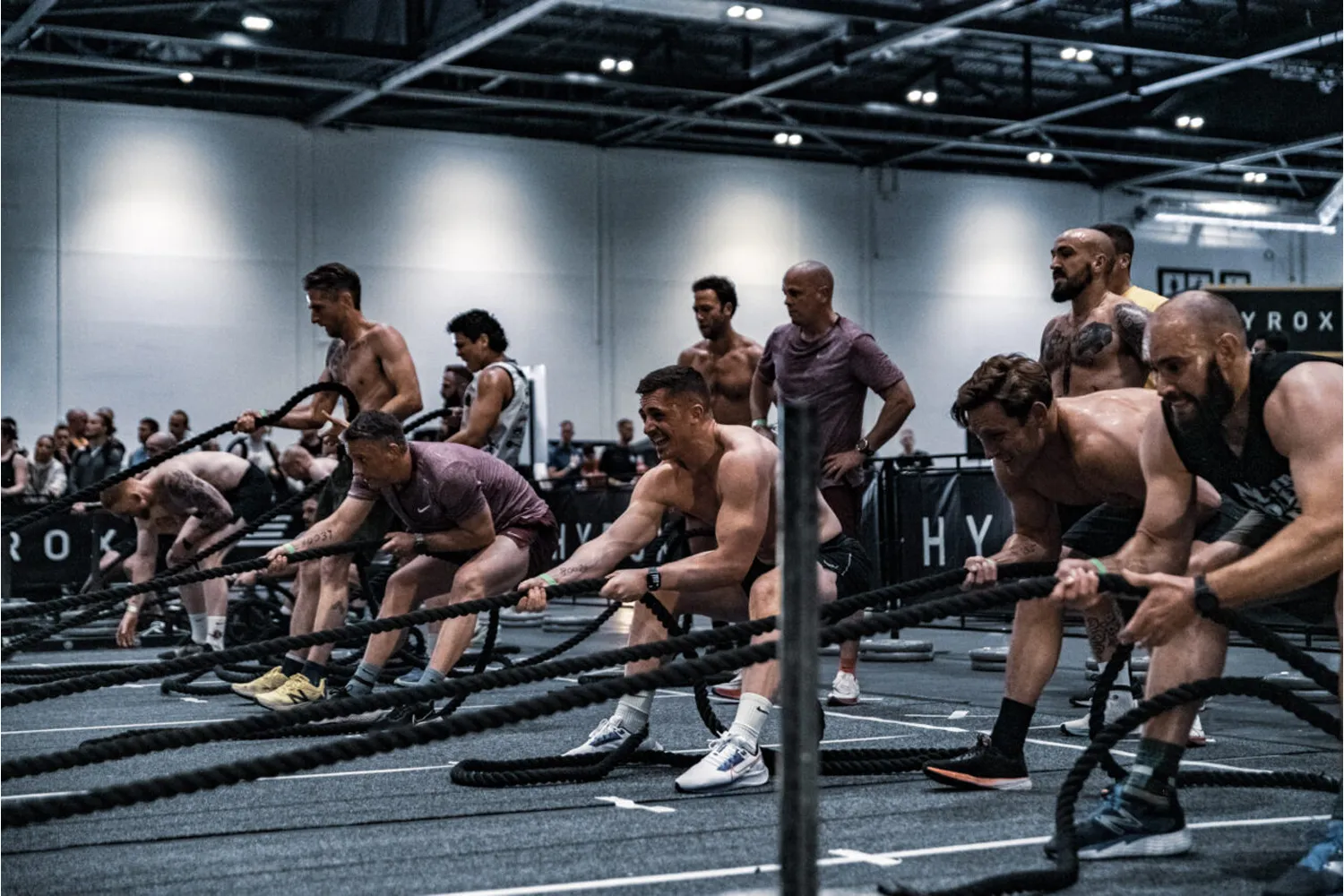
Quick Answer: Yes, can you train for HYROX and CrossFit together is a common question, and many athletes successfully combine both. The key is balancing explosive weightlifting with aerobic volume while carefully managing overall training volume, rest days, and recovery to prevent burnout and joint overuse.
Sample Workout Routine
| Day | Session | Focus |
| Monday | CrossFit Strength & WOD | Heavy squats/presses paired with a short, high-intensity anaerobic circuit. |
| Tuesday | Easy Aerobic Engine | 45–60 minute easy zone 2 run or steady SkiErg session. |
| Wednesday | HYROX Station Practice | Sled pushes, wall balls, and erg work paired with moderate running intervals. |
| Thursday | CrossFit Skill & MetCon | Olympic lifting technique work (cleans/snatches) plus a gymnastics-focused WOD. |
| Friday | Active Recovery / Rest | Low-impact mobility work, light walking, or complete rest. |
| Saturday | HYROX Long Endurance | Extended simulated race block or long run with low-skill functional stations. |
| Sunday | Full Rest Day | Complete rest, targeted soft tissue work, sleep, and nutrition focus. |
Guidelines to Avoid Overtraining
-
Limit High-Intensity Outbursts: Cap total near-maximal WODs and heavy competition-simulation efforts at 2 to 3 sessions per week to protect your central nervous system.
-
Protect Your Running Base: Keep your long aerobic runs at a true conversational zone 2 pace rather than turning every weekly run into a race.
-
Taper Before Competition: Reduce total training volume by 40–50% during the two weeks leading up to a major race or competition.
-
Respect Joint Pain and Tendon Fatigue: Persistent achiness in your knees, shoulders, or Achilles tendons is a sign to drop total volume and schedule extra rest.
(Note: This weekly routine is a general framework and should be modified by a certified fitness coach based on your individual recovery capacity, athletic history, and specific race timeline) [ADD YOUR OWN COACHING/TRAINING OBSERVATION HERE].
Safety, Evidence and How We Researched This
Quick Answer: High-intensity metabolic conditioning and heavy resistance training demand a balanced, evidence-informed perspective. We flag data limitations and emphasize safety guidelines because pushing physical limits carries real physical risks, making informed programming, proper recovery, and medical oversight essential for long-term health.
Trust & Transparency Summary
| Trust Element | What We Did |
| Sources Used | Referenced primary materials from official HYROX and CrossFit platforms, public health guidelines from WHO and CDC, and peer-reviewed exercise science literature. |
| Data Limits | HYROX growth figures rely on official event reports; cost breakdowns reflect UK-based gym and entry fee averages and vary globally. |
| Experience | [ADD YOUR OWN TRAINING/COACHING EXPERIENCE HERE] |
| Updates | Reviewed and updated in October 2026. Content will be revised when major rule changes, division adjustments, or entry cost updates occur. |
Before You Start
-
Obtain Medical Clearance: Consult a primary care physician before beginning high-intensity functional training, particularly if you have pre-existing cardiovascular issues, joint conditions, or high blood pressure.
-
Build Training Volume Gradually: Avoid sharp spikes in weekly running mileage or total workout repetitions to allow tendons, ligaments, and joints time to adapt.
-
Learn Technique Under Supervision: Work with a qualified coach to master foundational barbell mechanics, gymnastics scaling, and running posture before adding heavy intensity.
-
Watch for Warning Signs: Stop training immediately and seek urgent medical care if you experience extreme, disproportionate muscle pain, severe localized swelling, or dark, cola-colored urine (key symptoms of exertional rhabdomyolysis).
-
Prioritize Rest and Hydration: Support high physical outputs with adequate fluid intake, balanced daily nutrition, and 7 to 9 hours of restorative sleep per night.
Disclaimer: This article provides general educational information only and does not constitute formal medical or professional coaching advice.
HYROX vs CrossFit FAQs
Is HYROX or CrossFit better for beginners?
HYROX is generally more accessible for beginners because its functional stations rely on straightforward human movements like rowing, pushing, and lunging. CrossFit is highly scalable, but its complex Olympic lifts and gymnastics require a longer technical learning curve.
Which is better for fat loss, HYROX or CrossFit?
Neither format causes fat loss on its own; both burn substantial energy, but results depend on total weekly activity, nutrition, and maintaining a calorie deficit. HYROX offers higher continuous aerobic volume, while CrossFit builds lean muscle that supports resting metabolism.
Which builds more strength and muscle?
CrossFit is superior for maximal strength and muscle power because it incorporates heavy barbells, heavy squats, and complex lifts near 1-rep maximums. HYROX builds exceptional muscular endurance using moderate, fixed loads rather than top-end power.
Is HYROX harder than CrossFit?
They present different physical challenges. HYROX is an unyielding 60–90+ minute aerobic test that causes continuous metabolic fatigue. CrossFit creates acute central nervous system stress through short, explosive, high-intensity intervals and complex skill requirements under distress.
Do I need to be a good runner for HYROX?
You do not need to be an elite runner to complete HYROX, but running makes up 8 km of the race, making aerobic engine base-building essential. Beginners can strategically mix walking intervals during early run loops to manage fatigue.
Final Thoughts on HYROX vs CrossFit
Choosing between HYROX vs CrossFit comes down to whether you prefer an endurance race blueprint or dynamic daily barbell variety. HYROX builds an elite running engine and clear pacing goals, while CrossFit develops maximal strength, power, and gymnastics mastery.
Test both styles directly before deciding on a full routine. Book one drop-in class at a local affiliate and run a simulated station circuit at your gym.
Explore our full Fitness & Training section on brasssmile.life for more functional fitness guides and structured workout routines.