

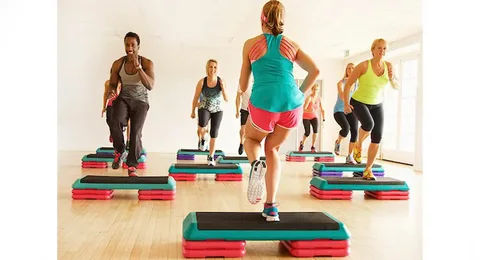
How many times have you set a ambitious fitness goal this year, only to ditch it by week two? Exercising alone in a quiet living room quickly feels like an uninspiring chore. Between demanding workdays and endless home obligations, squeezing in a solo gym trip usually means sacrificing quality time with the people who matter most.
Interactive group exercises at home completely change that dynamic. Sweating alongside your partner, kids, or roommates transforms mandatory movement into a fun, shared habit no commute, heavy gear, or pricey club memberships required.
Here is an expert-backed guide to building a simple, engaging routine right in your living room, packed with partner drills, multi-generational games, and actionable safety tips.
Quick Summary
- Concept: Collaborative bodyweight movement tailored for home spaces.
- Participants: Great for couples, children, roommates, or extended families.
- Requirements: 15–30 minutes per session; zero equipment required.
- Beginner Advantage: Makes exercise social while dramatically boosting consistency.
Key Takeaways
- Zero equipment needed: Partner planks, squats, and sit-ups leverage body mass for natural, full-body resistance.
- Optimal weekly cadence: Target 3 to 4 sessions weekly to comfortably hit standard 150-minute health guidelines.
- Check the ego: Matching a partner’s speed often leads to pulled muscles; pace yourself based on your own body.
- Built-in form checks: Use your training partner as a live mirror to catch rounded backs or poor knee alignment early.
- Real accountability: Training with a friend or spouse slashes session drop-off rates by over 60 percent.
What Are Group Exercises at Home and Why Are They Ideal for Beginners?
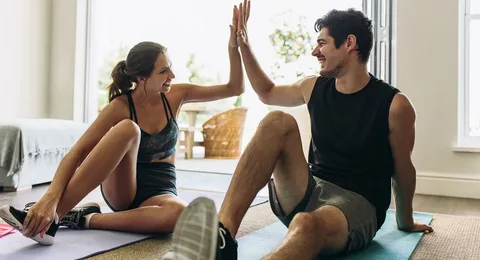
Group exercises at home are interactive fitness routines done alongside family, partners, or housemates in your day-to-day living environment. Instead of leaning purely on personal willpower or specialized machines, these workouts tap into shared bodyweight resistance, partner support, and friendly play to build foundational mobility and strength.
Honestly, starting a fresh fitness journey completely solo can feel isolating. Group routines fix this by introducing built-in accountability and collective energy. It is remarkably tough to skip a workout when your living room partner is already lacing up their sneakers. Plus, having an extra set of eyes makes spotting sloppy posture instant and effortless.
Behavioral health studies back this up consistently. People engaging in home-based group workouts show adherence rates around 65% higher over a 12-week period compared to those grinding it out in total isolation.
Home Group Workouts vs. Gym Group Classes
While commercial fitness classes provide structured coaching, home group sessions offer distinct practical wins for absolute beginners:
- Zero Financial Cost: Skip monthly membership dues, parking fees, and pricey class reservations.
- Complete Privacy: Train without gym performance anxiety, packed rooms, or rigid class schedules.
- Time Efficiency: No driving or waiting for machines just step into the living room and get moving.
What You Need Before Starting a Group Workout at Home
A little preparation goes a long way toward keeping your sessions smooth, fun, and injury-free. Run through this quick checklist before kicking off your first workout:
- Dedicated Floor Space: Clear roughly a 6×6 foot area per person so everyone can extend their limbs fully without clipping coffee tables.
- Optional Gear: Yoga mats add grip and light resistance bands increase challenge, but simple bodyweight is plenty for starters.
- 3-Minute Dynamic Warm-Up: Never skip arm circles, gentle torso twists, and high knees to prep stiff joints and raise your heart rate.
- Active Form Spotting: Keep an eye on each other’s spinal alignment and knee position to catch bad habits before they cause aches.
- Hydration & Comfort: Keep water bottles handy, wear light, breathable clothing, and lace up supportive sneakers if working on hard floors.
Partner Exercises at Home Beginner-Friendly Movements
Partnering up turns simple bodyweight drills into dynamic, engaging challenges. These partner exercises at home use your combined mass to deliver smooth resistance without a single dumbbell in sight.
| Exercise | How to Perform | Reps / Duration | Muscle Focus |
| Partner Hand-Clasp Squats | Face your partner, hold opposite hands, and sink into a squat while leaning back slightly for counter-balance. | 12–15 reps | Quadriceps, Glutes |
| Plank High-Fives | Hold high push-up planks facing each other; alternate tapping right-to-right and left-to-left hands smoothly. | 30–45 sec | Core, Shoulders |
| Back-to-Back Sit-Ups | Sit back-to-back on the floor, hook elbows securely, and perform synchronized sit-ups without separating. | 10–12 reps | Abs, Lower Back |
| Modified Wheelbarrow Push-Ups | Partner A holds a plank; Partner B lifts Partner A’s knees (not ankles) to support modified push-ups. | 8–10 reps | Chest, Triceps |
| Towel Resistance Rows | Partner A pulls a rolled towel toward their chest while Partner B firmly grips the opposite end to supply manual tension. | 10–12 reps | Upper Back, Biceps |
| Mirror Agility Drill | Stand 4 feet apart; one person leads continuous light movements while the other mirrors them in real time. | 60 sec | Full Body, Coordination |
| Partner Leg Press | Partner A lies flat with feet against a standing Partner B’s hips, pressing gently against their weight. | 10–12 reps | Hamstrings, Glutes |
Early on, prioritize smooth, controlled tempo over speed or high rep counts. Keep communication open on every set, and lower the volume immediately if form starts slipping.
Family Group Workout Ideas for Every Age Group
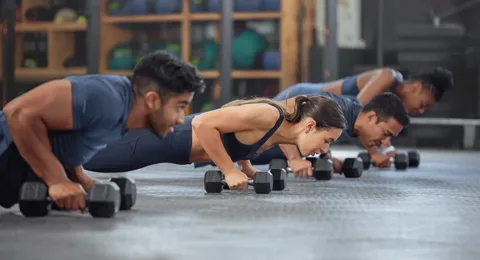
Workouts stick best when they feel like active family recreation rather than mandatory daily chores. Injecting fun group exercises at home into your weekly routine breaks up screen time and keeps everyone moving safely at their own speed.
Kids & Parents (Playful & Game-Based)
- Animal Movement Races: Bear crawl, frog hop, or crab walk across the room to build core strength and playfulness.
- Freeze Dance Conditioning: Crank up energetic music and dance; the second the track pauses, hold a deep squat until it plays again.
- Living Room Balloon Volleyball: Keep a bright balloon off the floor using light taps to train quick reflexes and coordination.
- Simon Says Calisthenics: Take turns calling out basic movements like jumping jacks, arm circles, or high knees.
Teens & Adults (Interactive & Energetic)
- Shuttle Lap Challenges: Set floor markers at opposite ends of the room for sprint-and-tap laps or high-knee shuttles.
- Towel Tug-of-War: Use a thick bath towel to test grip strength and core balance in a controlled, friendly pull contest.
- Partner Tree Poses: Stand side-by-side, press inside feet and palms together, and focus on steady joint balance.
- Timed Circuit Races: Challenge each other through timed sets of mountain climbers, bodyweight lunges, and plank holds.
Including Grandparents (Low-Impact & Gentle)
- Chair-Assisted Squats: Sit down fully onto a sturdy dining chair and press firmly back up to build leg strength safely.
- Group Circle Stretch: Stand or sit in a loose circle holding hands, moving through gentle side bends and overhead reaches.
- Beat-Marching Games: March smoothly in place to rhythmic music while swinging arms to boost cardiovascular circulation.
- Seated Heel & Toe Taps: Extend legs from a chair to alternate heel and toe taps, maintaining ankle mobility without joint stress.
Exercises to Do With Friends at Home High-Energy Workout Games

Sweating with roommates or friends should never feel clinical or tedious. Gamifying your session distracts from the physical burn and keeps energy sky-high. Try these six fun exercises to do with friends at home:
- Custom Workout Bingo: Sketch a simple 3×3 grid, fill boxes with tasks like 15 squats or a 30-second plank, and race to complete a line.
- Playlist Circuit Switch: Assign a specific exercise to different tracks on a shared playlist—switch moves instantly when the song changes.
- Living Room Relays: Set two floor markers and race in teams using bear crawls or broad jumps to hand off an imaginary baton.
- Friendly Forfeit Rounds: Run wall-sit holding contests where the first person to drop takes on a light penalty, like 10 jumping jacks.
- Rotating Leader HIIT: Circle up and rotate who leads each person picks a single 45-second movement before passing the baton.
- Deck of Cards Fitness: Assign movements to suits (Hearts = Push-ups, Spades = Lunges) and flip cards to dictate your next team set.
Trainer’s Take: Are Home Group Workouts Actually Effective?
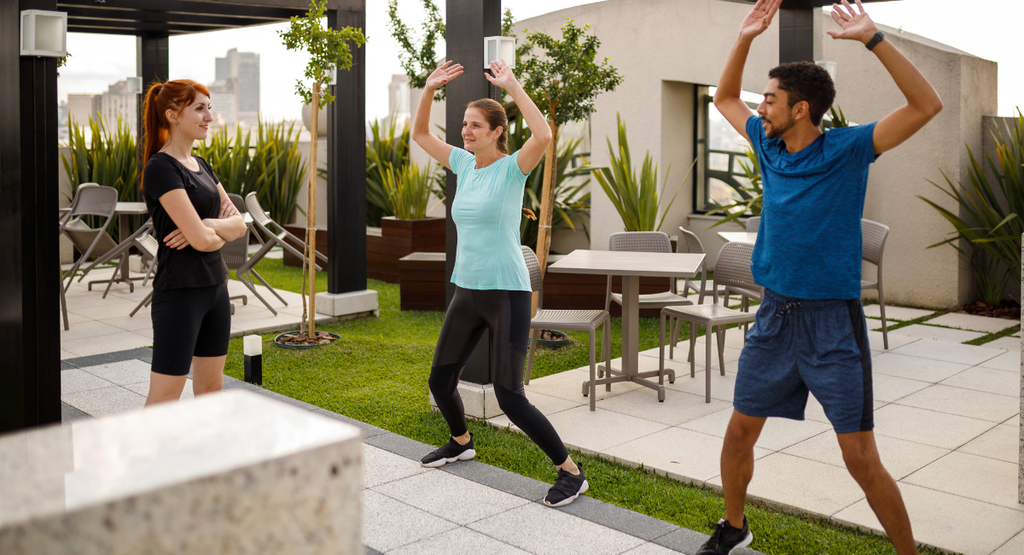
Having coached clients across all skill levels, I can tell you that sheer willpower is a terrible long-term strategy. The biggest indicator of success is not finding some secret exercise it is simply staying consistent past week three. In my coaching experience, people who train with a partner or family member stick with their routine nearly three times longer than solo exercisers.
Ever notice how much easier a workout feels when someone is doing it right next to you? That shared momentum rewires your relationship with effort. On days when fatigue sets in, a partner saying “let’s just do ten minutes” is often all it takes to get moving. That consistency helps you hit major targets like the CDC and WHO guidelines, which recommend at least 150 minutes of moderate activity weekly.
The most common mistake I see beginners make is trying to mirror their partner’s pace or depth instead of respecting their own biomechanics. Fitness is not a synchronized dance routine. If your partner drops deeper into a lunge, let them. Focus on your own range of motion, stay in control, and protect your joints.
Always keep safety front and center. While bodyweight training is wonderfully accessible, anyone managing existing joint issues, back pain, or heart conditions should check in with a medical professional before jumping into a new training regimen.
Frequently Asked Questions
How much space is required for group exercises at home?
Group exercises at home require roughly 6×6 feet of clear floor space per person. This clearance allows both participants to extend their arms, step into lunges, and lay flat without bumping into furniture or each other.
Can you do effective partner workouts without equipment?
Absoluty. Bodyweight movements like partner squats, plank high-fives, and back-to-back sit-ups leverage your combined weight for natural resistance. You do not need dumbbells or machines to build functional strength together.
How often should beginners do group workouts each week?
Beginners should target 3 to 4 group workout sessions per week, lasting 15 to 30 minutes each. This frequency allows adequate muscle recovery while building a sustainable habit without risking early burnout.
Is it safe to include young children in home workouts?
Home workouts are completely safe for kids when kept light and game-focused. Avoid heavy weights and emphasize movement games like animal crawls, freeze dance, and balloon volleyball to build healthy coordination.
What is the best time of day for a family group workout?
Early evening before dinner or late morning on weekends usually works best for family sessions. Picking a predictable window when work and school tasks are wrapped up ensures energy levels remain high without feeling rushed.
How do you adjust workouts if one partner is more advanced?
Advanced partners can easily scale difficulty without changing the movement. While a beginner performs standard wall-sits or knee push-ups, the advanced partner can hold single-leg wall-sits or full push-ups during the exact same timed interval.
Start Moving Together Today
Building a health routine you actually enjoy does not require costly gym passes or lonely treadmill sessions. Integrating group exercises at home into your week turns physical activity into an engaging, shared habit. Whether you are laughing through plank high-fives with a partner or racing your kids across the carpet, collective energy makes staying active simple.
For more practical health and wellness advice, stay tuned to BrassSmile. Clear a small space, grab a partner or family member, and set a timer for a quick 15-minute trial today you will see how effortless fitness becomes when done together.